Grid Vulnerabilities and Project Assessment
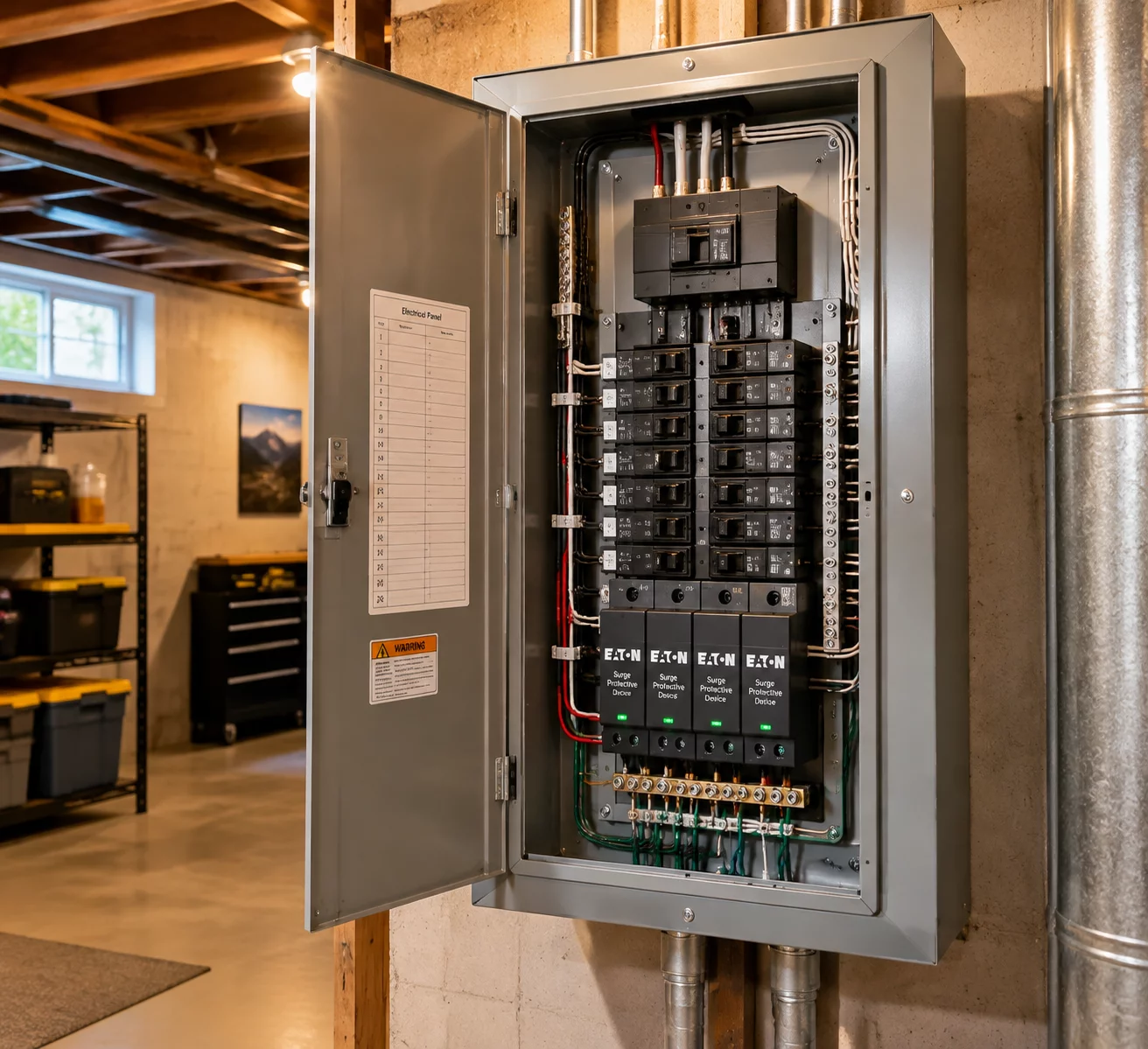
Suburban houses connected to overhead secondary distribution grids face severe line fluctuations. Seasonal thunderstorms, distant lightning transients, and utility switching generate voltage spikes that frequently exceed 1,500 volts. In this private 280-square-meter residence, frequent grid drops and voltage spikes were repeatedly triggering error codes on the geothermal heat pump inverter and threatening high-end home automation controllers.
Our engineering assignment focused on delivering an autonomous defense boundary directly inside the main breaker panel. The homeowner demanded zero manual resetting under everyday transients, complete line suppression against direct external lightning strikes, and clean continuous current flow to safeguard microprocessors and refrigeration compressors.
Critical Environmental Constraints
Unlike compact urban residential apartments, suburban estates present complex electrical grounding conditions and heavy inductive operating loads. The engineering strategy resolved three specific challenges before device mounting:
- High inductive motor startup currents from a 4 kW heat pump and a 1.5 kW deep-well pressure booster requiring high-inrush tolerant relays.
- Initial soil resistance testing measured 22 Ohms at the incoming ground bar, necessitating additional vertical copper grounding rods.
- Sensitive micro-inverter electronics inside the home audio and security systems requiring nanosecond-level response clamping.
Three-Tier Coordinated Protection Deployment
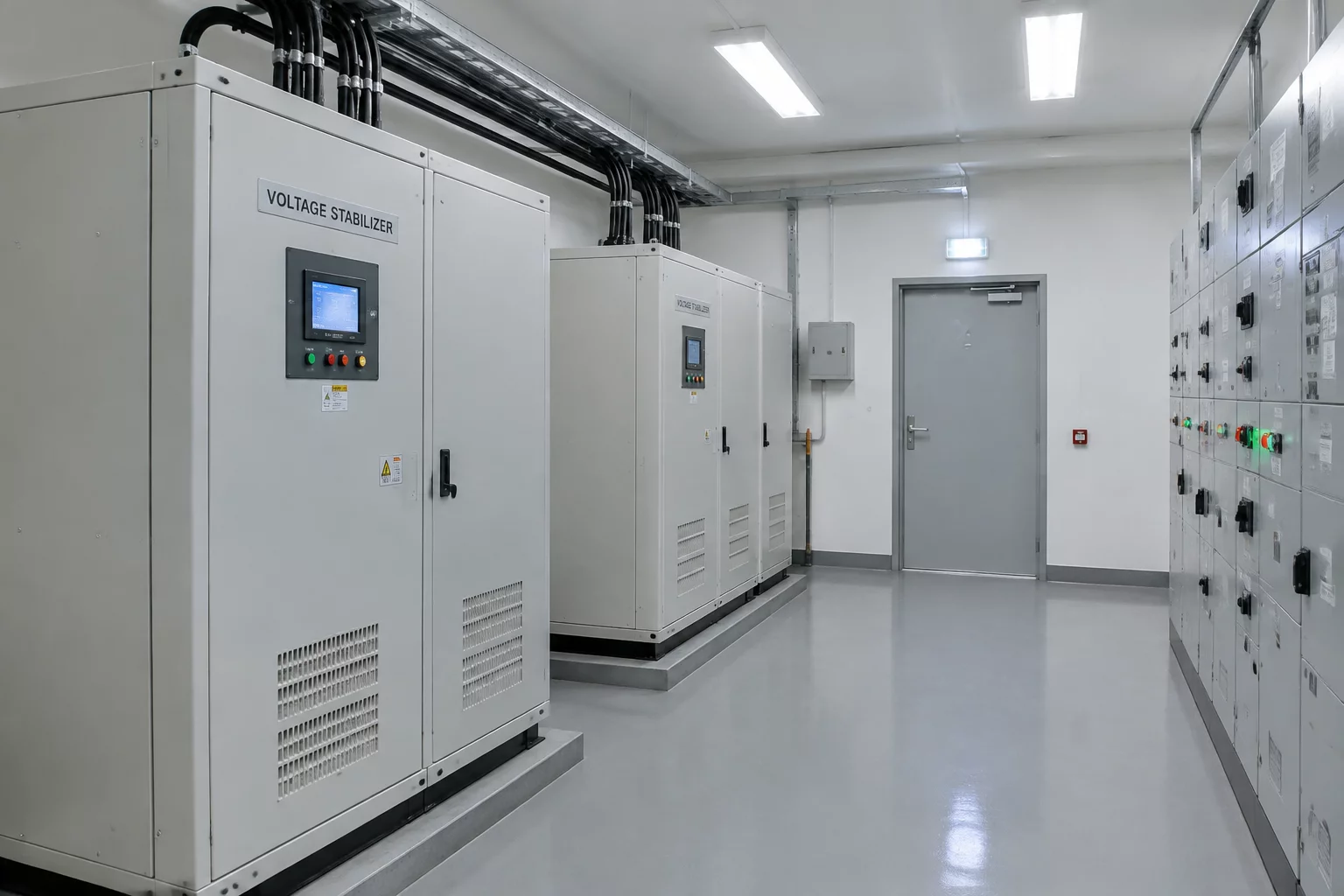
The installation follows an integrated three-level surge arrest strategy. Right after the main utility meter, heavy-duty Class I spark gaps absorb the primary energy of catastrophic lightning discharges up to 40 kA. Immediately adjacent, Class II metal-oxide varistor modules catch remaining transient waves, capping residual voltages below 1.2 kV.
Downstream circuits feature programmable 63A micro-controlled voltage relays that isolate sensitive internal loops whenever feeder voltage deviates beyond 175V or 260V. An upgraded auxiliary grounding array reduced ground impedance down to 3.8 Ohms, establishing safe, low-resistance discharge channels for transient energy.
Leave a Review or Question
Share your engineering inquiry or feedback on this implementation.