Why single plug-in power strips fall short and how panel-mounted suppression creates an impenetrable multi-layered safety shield for modern smart households.
Robert Williams
•
October 1, 2026
•
6 min read
•
Grid Protection
Why Standard Power Strips Leave Your Household Vulnerable
Most property owners assume that plugging a desktop computer or an entertainment console into a regular retail power strip provides sufficient defense against electrical spikes. In practice, localized plug-in strips respond far too sluggishly and absorb only minimal energy pulses. Heavy mechanical equipment throughout the home, including central air conditioners, variable-speed heat pumps, induction cooktops, and smart refrigeration compressors, connects directly to wall circuits with zero intermediary surge filtering.
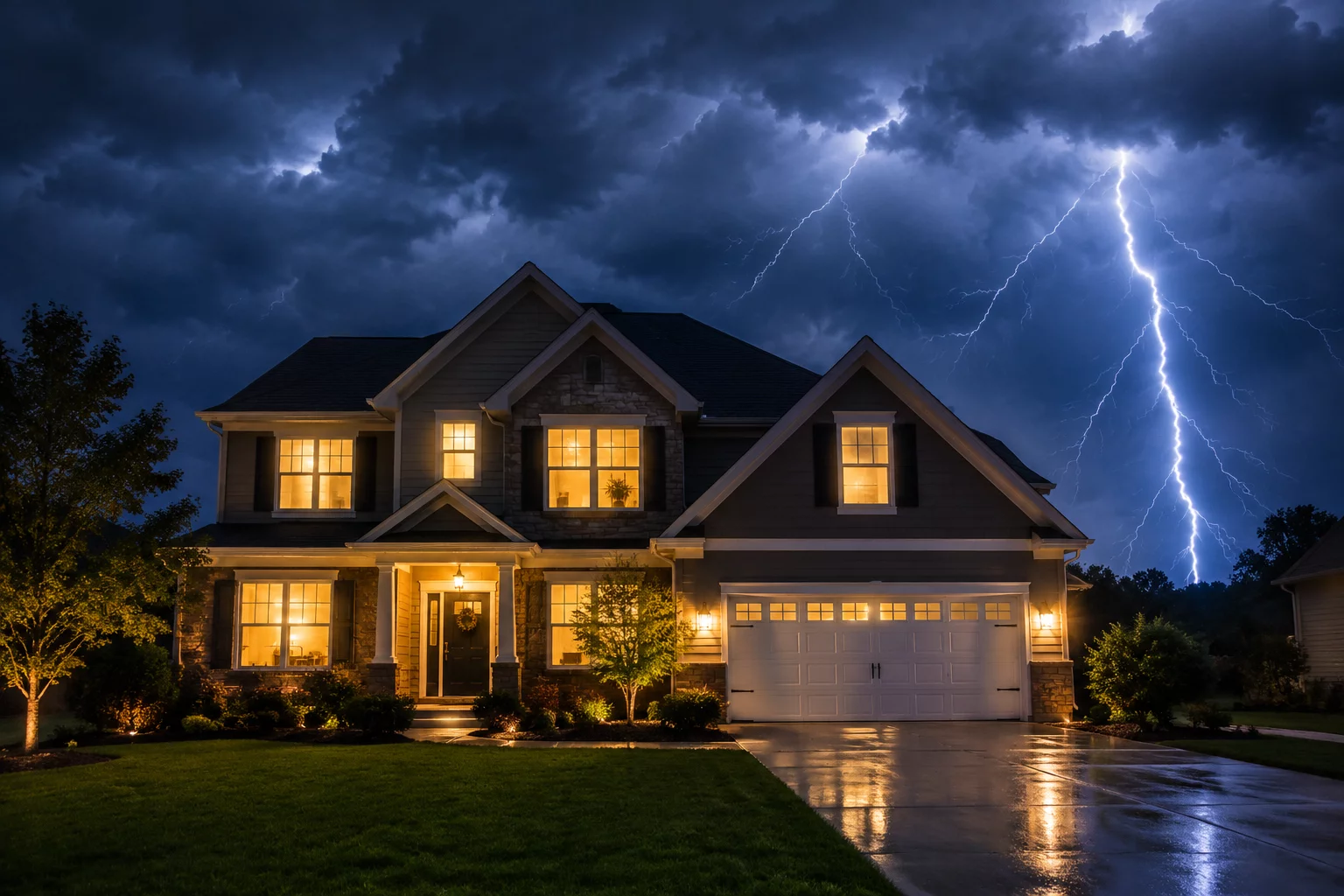
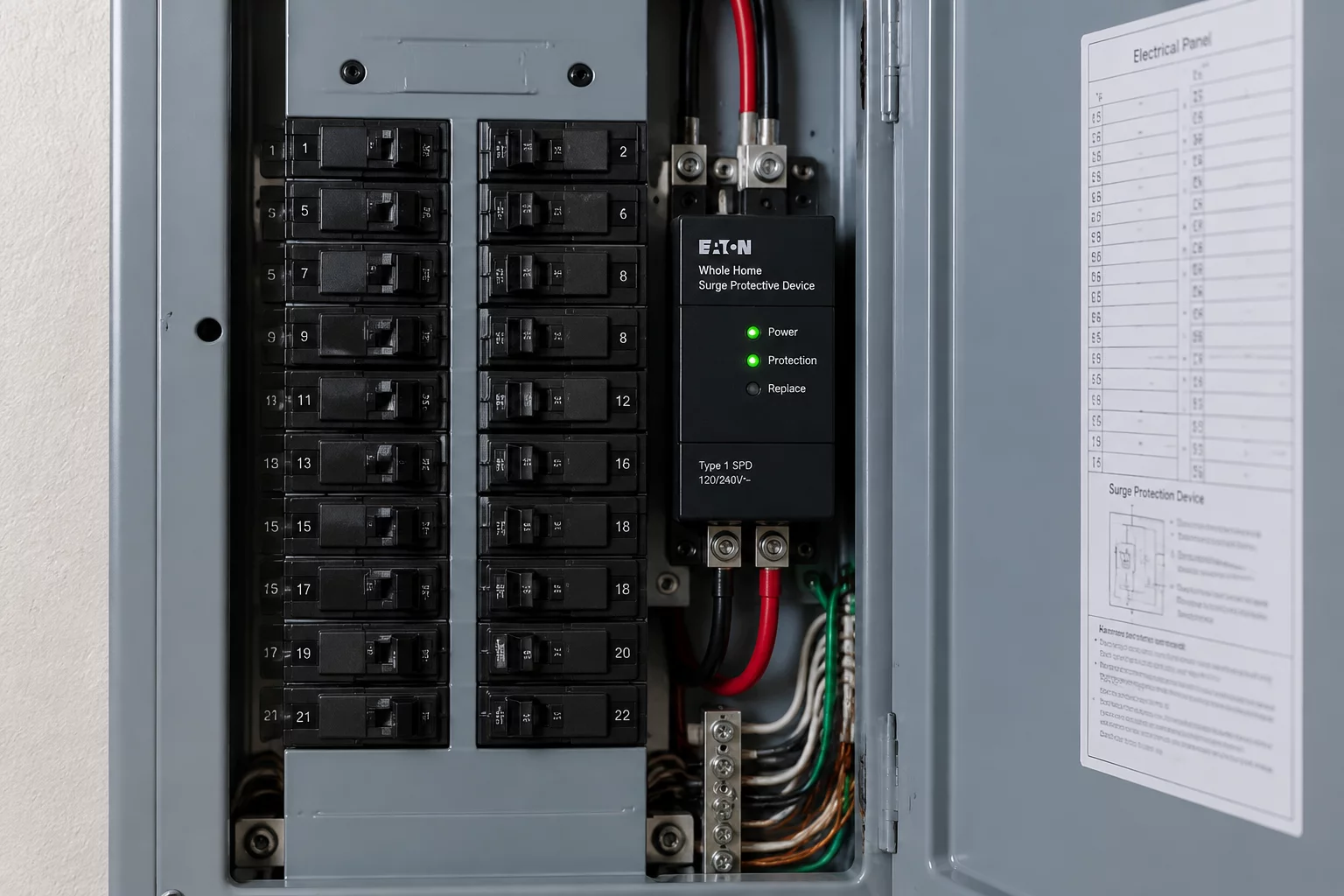
Over eighty percent of electrical transient spikes actually originate inside the house rather than from lightning storms. Every time an electric furnace cycles, a well pump kicks on, or a refrigerator compressor shuts down, miniature voltage inductive kicks travel through the wiring. A whole-home surge protective device (SPD) hardwires directly into the central electrical panel, catching voltage spikes right at the electrical threshold before damaging currents migrate toward delicate microchips in everyday appliances.
Selecting an appropriate residential surge defense module requires reviewing performance standards defined under UL 1449 4th Edition and IEC 61643-11 specifications. The primary benchmark indicators determine how effectively the device safely channels excess potential away into the grounding electrode:
Protection Parameter
Residential Standard
System Significance
Surge Current Capacity (Imax)
50 kA to 100 kA per phase
Handles nearby atmospheric lightning discharges
Voltage Protection Rating (VPR)
600 V to 700 V (L-N)
Restricts residual voltage entering household circuits
Response Time Threshold
< 1 Nanosecond
Instantaneous MOV semiconductor conduction
Thermal Disconnect Safety
Fused Thermal Cutoff
Prevents catastrophic component overheating
Five Essential Advantages for Modern Homes
Modern households operate dozens of sensitive microprocessors embedded in items that previously ran on simple electro-mechanical switches. Inverter-driven HVAC units, smart washers, smart televisions, and electric vehicle wall chargers depend on complex electronic boards that degrade gradually when exposed to continuous transient oscillations.
Comprehensive Perimeter Shielding: Secures all major hardwired infrastructure, including geothermal heat pumps, automated water heaters, well pumps, and rooftop solar inverters without needing individual plug adapters.
Prolonged Component Longevity: Suppresses repetitive micro-voltage spikes caused by utility grid switching and heavy internal inductive loads, preventing gradual breakdown of delicate silicon traces.
Fire Hazard Prevention: Premium Type 1 and Type 2 panel devices integrate fail-safe thermal disconnect barriers, neutralizing the danger of electrical arcing and combustion within the panel.
In addition to physical equipment preservation, home insurance underwriters increasingly recommend whole-home protection units. A single violent utility transformer explosion or nearby tree-branch fault can destroy thousands of dollars in connected domestic equipment, making breaker-level surge defense an immediate investment that pays for itself on day one.
Installation Protocols & Visual Verification
A qualified electrician mounts the whole-home protector directly to the service breaker panel using a dedicated dual-pole breaker. Keeping conductor lead wires as short and direct as possible is critical, as lead length adds circuit inductance that slows down suppression response time. Concurrently, the technician inspects the primary earth grounding rod to verify low grounding resistance, which guarantees an effortless diversion route for high-voltage energy.
Following installation, regular visual monitoring is straightforward. Certified surge units feature dual LED status lights on their outer faceplate. Solid green lamps confirm that all internal metal-oxide varistor modules are fully active, while a red indicator or an audible chime signals that the module has absorbed a massive surge event and is ready for modular cartridge replacement.
Robert Williams
Senior Electrical Safety Specialist
Robert Williams is an electrical engineering consultant with 18 years of field experience auditing residential power quality, diagnosing transient voltage anomalies, and implementing whole-property grid defense architectures.
We experienced two circuit board replacements on our induction stove after minor thunder activity last year. Installing a 80kA surge arrester on the main distribution panel resolved the issue entirely. Excellent breakdown of the lead wire length impact.
Mark HendersonMaster Electrician
09/20/2026
@David Miller Keeping those connections under 15 cm minimizes trace impedance dramatically. Induction boards are notorious for failing under subtle 400V micro-transients.
Sarah JenkinsSmart Home Enthusiast
09/23/2026
Can a Type 2 panel surge unit be paired safely with existing point-of-use UPS systems in a home office, or do they conflict with each other?
Thomas ClarkSystems Technician
09/25/2026
@Sarah Jenkins They complement each other perfectly! That cascading strategy is called staged defense: the main panel handles massive energy, and the UPS clamps residual noise.
Gregory EvansElectrical Contractor
09/28/2026
Crucial point regarding low grounding rod resistance. An SPD is only as capable as the earth ground path it dumps voltage into. Always test ground impedance during installation.
Leave a Comment
Share your engineering insights or inquire about surge defense architectures.

Reader Discussion
We experienced two circuit board replacements on our induction stove after minor thunder activity last year. Installing a 80kA surge arrester on the main distribution panel resolved the issue entirely. Excellent breakdown of the lead wire length impact.
Can a Type 2 panel surge unit be paired safely with existing point-of-use UPS systems in a home office, or do they conflict with each other?
Crucial point regarding low grounding rod resistance. An SPD is only as capable as the earth ground path it dumps voltage into. Always test ground impedance during installation.
Leave a Comment
Share your engineering insights or inquire about surge defense architectures.