Protect sensitive home electronics and HVAC units from damaging brownouts, surges, and inconsistent grid voltages with an engineered sizing strategy.
James Smith
•
August 10, 2026
•
8 min read
•
Voltage Regulation
Why Voltage Stabilization Is Essential for Modern Homes
Municipal power distribution networks frequently fluctuate due to seasonal loads, industrial switching, and aging grid infrastructure. Typical utility lines deliver nominal 230V, but real-world measurements often drift anywhere between 165V and 260V. Household electronics—especially inverter compressors in heat pumps, modern refrigeration units, smart home servers, and precision audio gear—suffer accelerated component fatigue or immediate board failures when subjected to chronic under-voltage or severe over-voltage conditions.
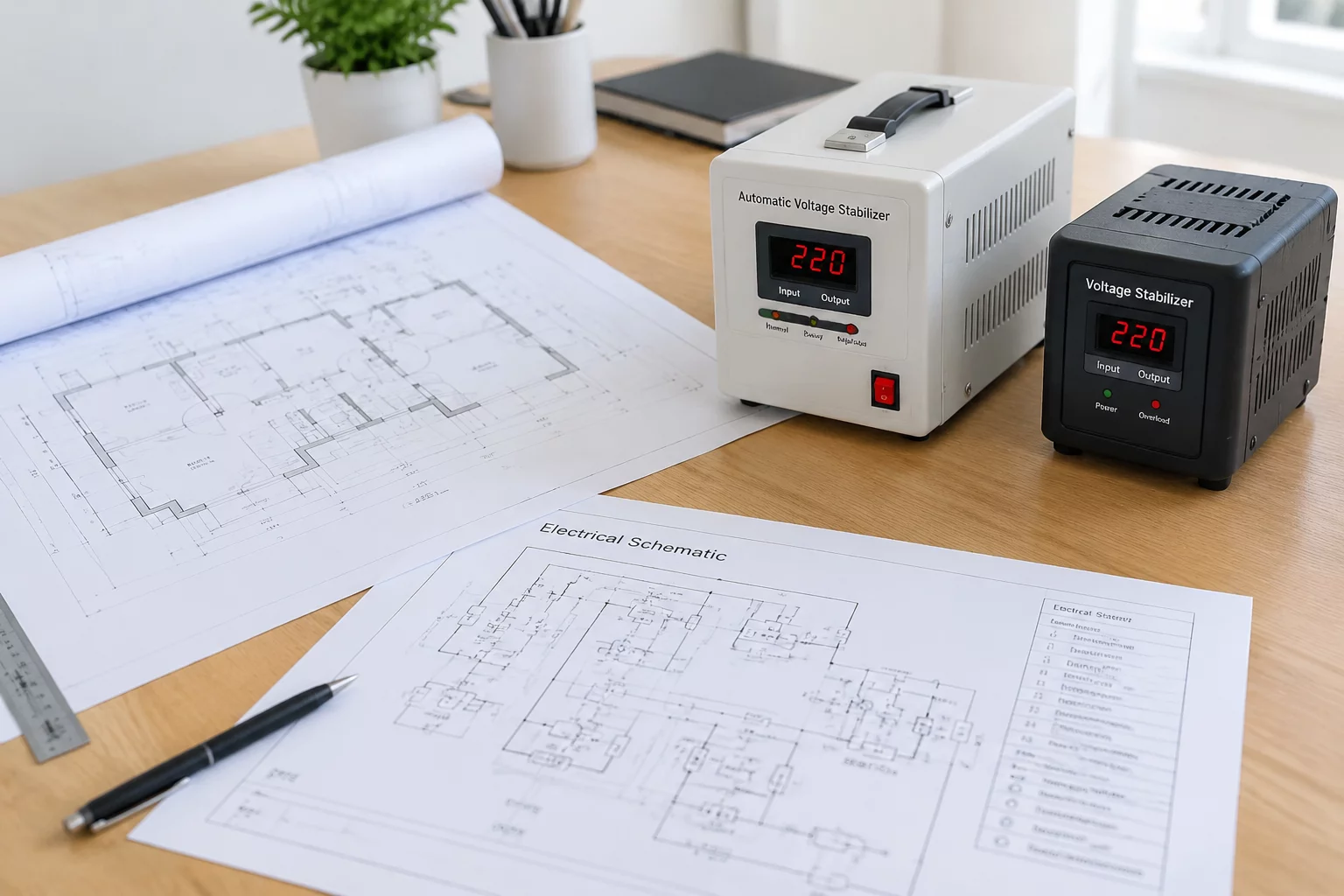
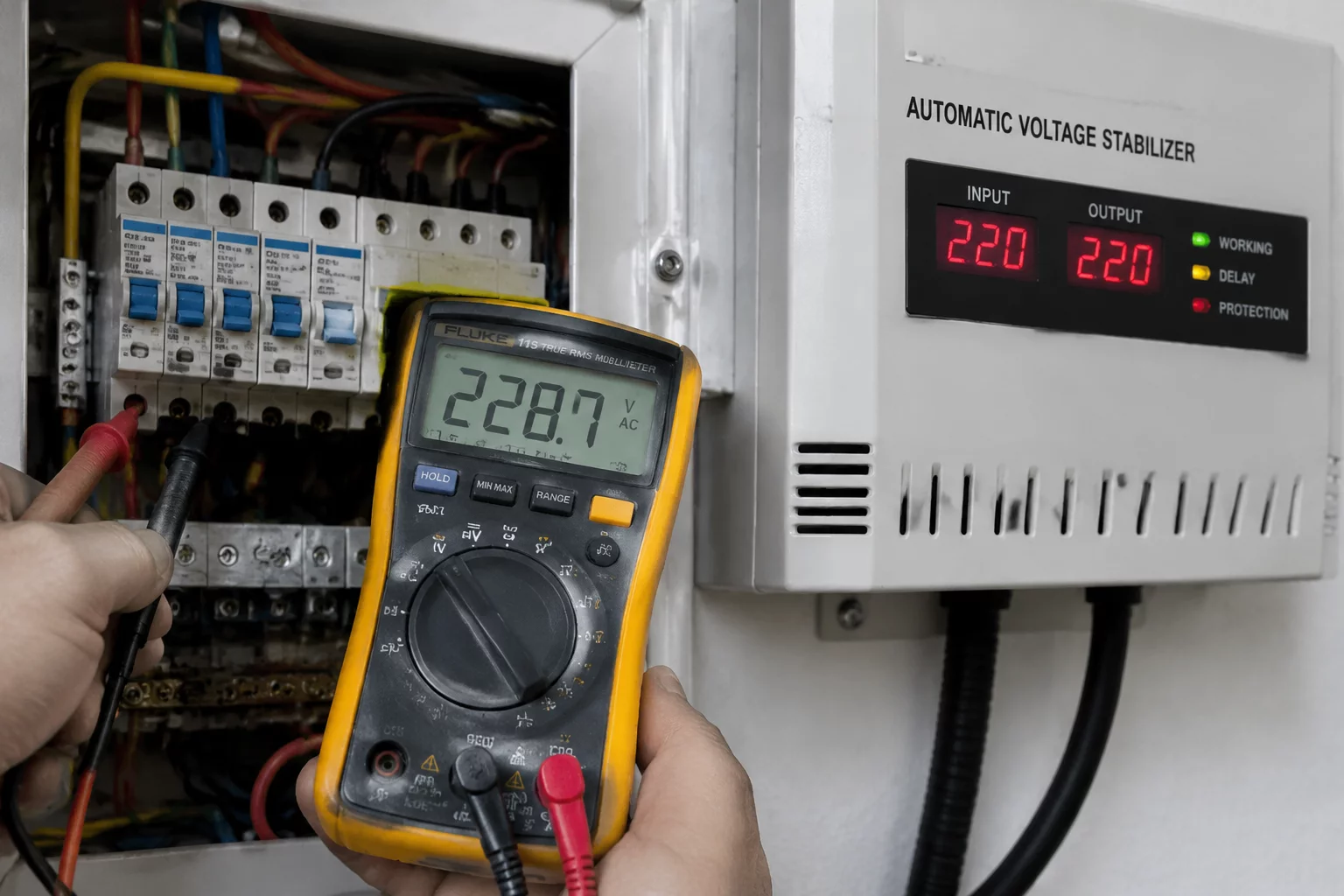
A voltage stabilizer constantly monitors incoming supply and adjusts output voltage to a tight tolerance window, typically 220V or 230V within ±2% to ±8%. Unlike simple surge suppressors that only clamp microsecond transient spikes, an automatic voltage stabilizer handles sustained line deviations lasting minutes or hours. Choosing the correct stabilizer topology and capacity prevents unexpected downtime while extending the operating life of your household electrical infrastructure.
Need Whole-Home Protection?
Custom Surge Defense & Regulation Solutions
Review engineered residential protection architectures configured for suburban houses, apartment grids, and private solar installations.
Voltage regulators differ primarily by their internal switching mechanism, response time, and output precision. Understanding these operational differences ensures you select the correct device for your specific appliance sensitivity.
Stabilizer Topology
Voltage Accuracy & Speed
Best Residential Applications
Relay / Stepped Transformer
±5% to ±8% accuracy, 20–40 ms response
Budget lighting, basic pumps & resistance heating
Servo-Motor / Electromechanical
±1.5% to ±3% accuracy, 10–15 V/sec correction
Medical devices, lab gear & high-end audio setups
Electronic / Triac & Thyristor
±2% to ±4% accuracy, 10–20 ms response
Whole-house main panels, modern villas & quiet spaces
Double-Conversion Inverter
±1% precision, zero millisecond transfer
Sensitive gas boilers, servers & robotics
Sizing Your Stabilizer: Factoring Inrush and Power Factor
Calculating the required stabilizer rating involves more than simply adding up the wattage listed on equipment labels. Inductive loads equipped with electric motors—such as air conditioners, well pumps, and refrigerators—draw high starting currents known as inrush current during the first few cycles of activation. A 1,200W air conditioner can briefly draw 3,500W to 4,500W when the compressor cycles on. Failing to account for this initial surge will trip the stabilizer's internal circuit breaker or drag down line voltage.
Sum all continuous active loads (watts) and convert to apparent power (volt-amperes) using a standard 0.8 power factor.
Multiply inductive motor-driven loads by an inrush factor between 2.5 and 3.5 to determine momentary peak demand.
Add a mandatory 25% to 30% reserve margin to the total calculated kVA to accommodate future equipment additions and prevent stabilizer thermal stress.
Consider line voltage drop characteristics in your area before finalizing the device rating. As input voltage drops lower—for instance to 160V on a nominal 230V grid—a transformer-based stabilizer's effective output capacity diminishes proportionally. If your local grid routinely sags down to 150V, select a unit whose nominal rating exceeds your calculated home demand by at least 40% to guarantee full power delivery under extreme low-voltage conditions.
Practical Selection and Placement Checklist
Choose between centralized whole-house regulation or point-of-use units based on your home layout and budget. A centralized stabilizer mounted adjacent to the primary distribution panel protects every branch circuit simultaneously, requiring only a single installation footprint and unified maintenance. Conversely, individual compact stabilizers placed directly next to expensive gas heating boilers or entertainment consoles offer targeted filtering without the cost of high-power feeder cable runs.
Prioritize units featuring built-in digital telemetry, high and low cut-off relays, thermal overload shutoffs, and a mechanical bypass switch. The bypass switch allows grid power to feed the house directly during scheduled servicing without disrupting domestic electricity. Ensure the installation location provides at least 20 centimeters of open clearance on all ventilated sides to prevent ambient heat accumulation.
James Smith
Lead Power Systems Specialist
Senior electrical engineer with over 16 years of experience designing surge suppression arrays and power conditioning architectures for private residential estates and suburban properties.
Great breakdown of the inrush current calculations. Many homeowners underestimate the 3x surge factor on heat pumps and well pumps. When sizing 10kW stabilizers for rural properties, we always ensure a 30% reserve buffer, especially when input voltage frequently drops to 160V.
Marcus VanceGrid Systems Engineer
07/20/2026
@David Miller Absolutely agree David. The power derating curve at 160V input is where most undersized stabilizers fail thermally. Triac and thyristor units handle these rapid swings much better without the mechanical contact wear typical of older stepped relay models.
Sarah JenkinsHome Automation Specialist
07/29/2026
For sensitive IoT hubs and smart lighting drivers, do you recommend combining an inverter-type stabilizer with a secondary Class II surge arrester at the subpanel, or is the stabilizer's internal varistor enough?
James SmithArticle Author
08/02/2026
@Sarah Jenkins Definitely pair them, Sarah. While the double-conversion stabilizer provides clean, ripple-free sine wave regulation, a dedicated DIN-rail Type 2 surge arrester is needed to clamp high-energy lightning transients before they reach the stabilizer's power stage.
Leave a Comment
Share your engineering insights or inquire about surge defense architectures.

Reader Discussion
Great breakdown of the inrush current calculations. Many homeowners underestimate the 3x surge factor on heat pumps and well pumps. When sizing 10kW stabilizers for rural properties, we always ensure a 30% reserve buffer, especially when input voltage frequently drops to 160V.
For sensitive IoT hubs and smart lighting drivers, do you recommend combining an inverter-type stabilizer with a secondary Class II surge arrester at the subpanel, or is the stabilizer's internal varistor enough?
Leave a Comment
Share your engineering insights or inquire about surge defense architectures.